Indonesia can scale sustainable rice within existing regulated price tiers, lifting farmer net surplus by a modelled 31% while consumers pay no sustainability surcharge. A phased pathway grows a 100-hectare commercial trial into a 10,000-hectare portfolio, anchored by committed buyer demand.
Singapore, 15 October 2026 – Indonesia has a pathway to expand low-emission rice into mainstream retail at existing regulated prices, according to a briefing report published today by Philanthropy Asia Alliance (PAA) and Pijar Foundation in collaboration with World Economic Forum. Improved grain quality and milling recovery would allow sustainably grown grain to qualify for a premium-quality tier already set within the regulated market, lifting farmer incomes while cutting water use and methane emissions, without consumers having to pay for climate credentials.
Rice feeds more than 250 million people in Indonesia, where food self-sufficiency, or swasembada pangan, is a flagship government priority. Paddy cultivation also produces roughly 34% of the country's agricultural greenhouse gas emissions, placing the crop where national food security and climate goals meet, including the Low Carbon Development Initiative target of around one million hectares under low-carbon practices by 2030. With only about 10% of the world's rice traded internationally, domestic production and policy set the pace of that transition.
Making sustainable rice work for farmers and buyers
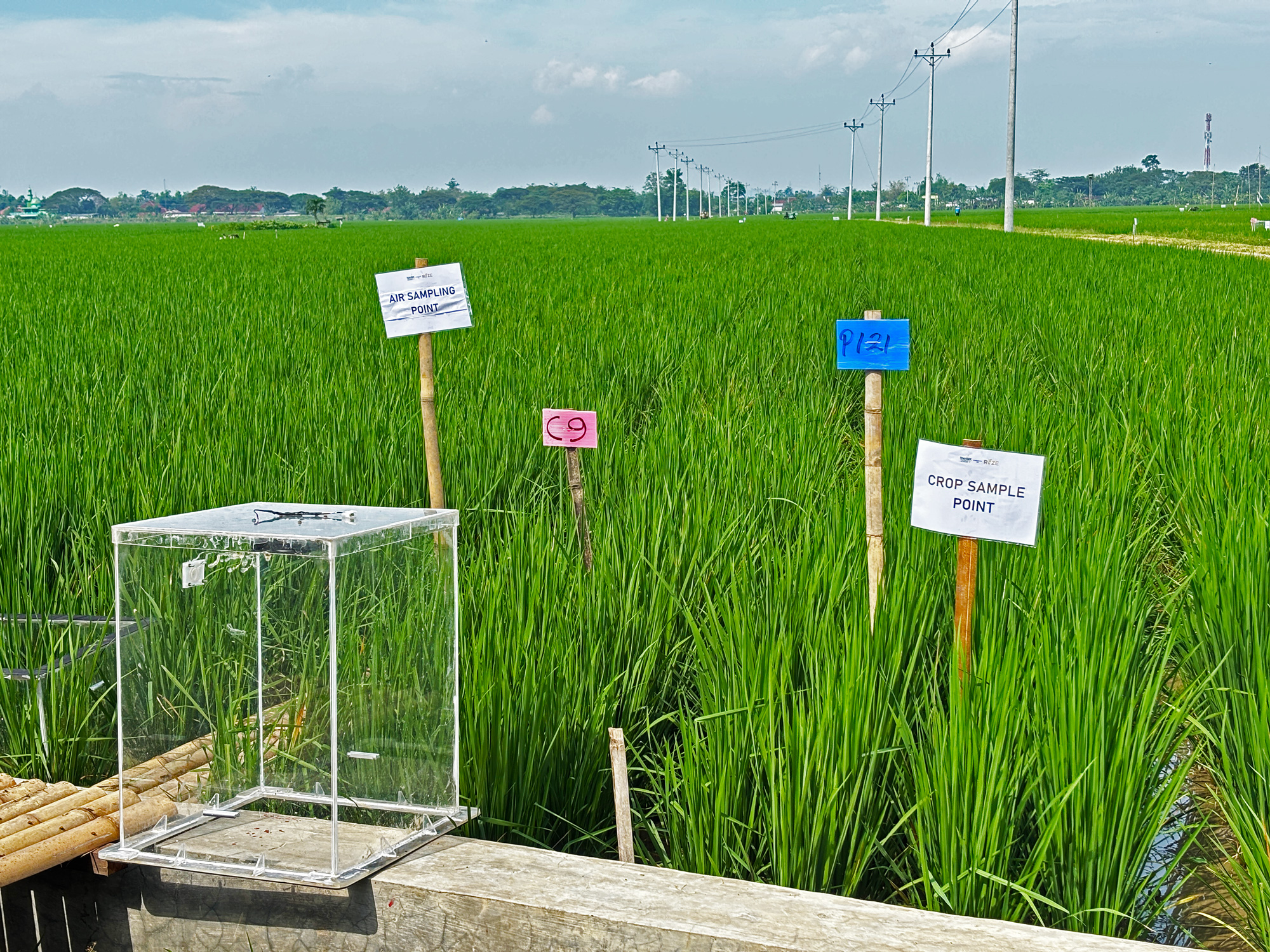
The report, "Scaling Sustainable Rice Systems in Southeast Asia: Insights from a Feasibility Study in Indonesia", draws on a 2026 study by Pijar Foundation into farm-level economics and the wider market system. The case builds on the completed agronomic trial in Grobogan, Central Java, led by Temasek Life Sciences Laboratory with PAA’s support, which produced evidence that alternate wetting and drying suits Indonesian paddies. The practice lets fields dry to a safe threshold before re-flooding, and under local conditions, it has maintained yields while reducing irrigation water use by up to 30% and methane emissions by up to 35%.
Under the modelled scenario, farmer net surplus rises by around 31%, driven by a higher farmgate price, a yield uplift of about 6% and lower total production costs. Offtakers, the millers and buyers who purchase the harvest, gain because the premium-quality tier returns more to them than the extra they pay farmers, lifting gross processing margin by an estimated 45%. A 100-hectare Entry Cohort, run over four cultivation seasons, is designed to test these assumptions under real operating conditions.
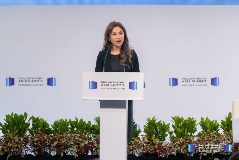
“Smallholder farmers should not bear the cost of the green transition. Changes in how rice is grown must reduce climate emissions and make economic sense for farmers. Our findings show that through effective collaborations, lower-emission rice can strengthen farmers’ livelihoods while reducing water use and emissions. That is the transition we need – one where sustainability becomes an opportunity,” said Cazadira Fediva Tamzil, Executive Director of Pijar Foundation.
Unlocking buyer demand and financing to scale sustainable rice
The report identifies committed demand as a prerequisite for scale. Securing demand before farmers change practices could provide confidence for adoption. Following the First Movers Coalition for Food's CEO Guide, the report sets out two routes for buyers. One building sustainable rice requirements into procurement specifications and another funding programmes within a supply-shed while farmers keep the freedom to sell on the open market.
"Farmers change how they grow rice once they know a buyer is waiting for the harvest," said Claire Oei, Climate & Nature Lead at PAA. "Credible demand signals give them that confidence and offer lenders a reason to extend working capital. For philanthropy, the task is to find the points along the value chain where early funding does the most to bring low-emission rice onto supermarket shelves. In Indonesia, the evidence places them at the farm gate, in first-loss cover that absorbs a severe harvest while farmers adopt new methods, and in the training that keeps those methods in use after the trial ends."
The financing is designed to shift as evidence accumulates. A successful 10,000-hectare portfolio could eventually support greater participation from development finance institutions and multilateral lenders, with commercial finance expected to play a larger role over time if the model continues to demonstrate viability.
A fully implemented 10,000-hectare portfolio could reach some 40,000 smallholder farmers and generate approximately US$40.5 million in farmer net surplus and US$15.0 million in gross processing margin each year. The modelled environmental gains, an estimated 40,000–60,000 tCO₂e of avoided emissions and 50–90 million m³ of irrigation water saved, extend the case well beyond the paddy.
The report forms part of PAA’s partnership with the First Movers Coalition for Food on a Southeast Asia series bringing together more than 60 organisations from industry, finance, government, farmer groups and research. As regional anchor partner for rice, PAA connects scientific evidence and existing funding with the private-sector demand needed to expand the model. Further testing of the report’s findings is intended to support validation and stakeholder engagement around such scalable rice-transition models.
”The economic case is clear: building resilient and s
ustainable rice value chains improve smallholder livelihoods and secure supply,” said Noopur Desai, Senior Manager, Food Initiatives at World Economic Forum. “Scale will be driven by public-private cooperation, demand-led commitments, and breakthrough finance solutions.”
Download the full report here. Organisations interested exploring collaboration, contact the First Movers Coalition for Food at FMCFood@weforum.org.
- END -
About the Philanthropy Asia Alliance (PAA)
Philanthropy Asia Alliance (PAA) is a Temasek Trust initiative dedicated to catalysing collaborative philanthropy in Asia through dynamic multi-sector partnerships. By harnessing collective strengths, PAA multiplies impact, accelerates positive change, and takes urgent action to address the pressing environmental and social challenges of our time. PAA's flagship programme is the annual Philanthropy Asia Summit. For more information, visit http://philanthropyasiaalliance.org.
About Pijar Foundation
Pijar Foundation is a philanthropic foundation and collaborative ecosystem born in Indonesia, with a growing footprint across Southeast Asia. We catalyse systemic change on strategic issues shaping our future talent and future planet. Across our three core pillars—Leadership and Capacity Building, Innovation and Entrepreneurship, and Policy Advocacy and Philanthropy—we bring together government, business, philanthropy, academia, and communities to strengthen local capacity, scale proven solutions, and shape the policies, partnerships, and institutions for lasting systems change. For more information, visit http://pijarfoundation.org.
About the First Movers Coalition for Food
The First Movers Coalition for Food is a flagship initiative of the World Economic Forum, that brings over 60 partners to unlock credible demand signals* and builds market confidence for regenerative, sustainable and resilient agri-commodities at scale. *Note: In full respect of all competition and antitrust laws and regulations.
Media contacts
Philanthropy Asia Alliance, Nicole Tan, comms@philanthropyasiaalliance.org
Pijar Foundation, Hilda Halida, hilda@pijarfoundation.org


-will-succeed-mr-lim-boon-heng-(right)-as-chairman-of-the-paa-board40a4a6ed-ba32-431e-986d-6092ca7fe74a.tmb-.png?Culture=en&sfvrsn=c4cec17_1)
.tmb-.jpg?Culture=en&sfvrsn=bc45b11_1)