

Vaccines, Wolbachia-based vector control and genomic surveillance are each producing real results against dengue and malaria, alongside the wider family of illnesses mosquitoes carry, yet none of these tools travels far without money and coordination behind them. Mosquito-borne disease prevention has reached a point where the science outpaces the systems built to deploy it. Climate change and rising mobility widen the exposed population every year, narrowing the window in which early, coordinated funding beats the cost of the next outbreak.
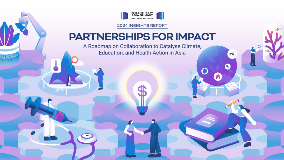
This white paper, published jointly by Philanthropy Asia Alliance, Temasek Foundation and Temasek Life Sciences Laboratory, maps a Five-Stock framework spanning the public sector, private industry, philanthropy and communities against five fronts of the fight, from surveillance to medical countermeasures. The World Health Organisation estimates that mosquito-borne diseases put close to 3.9 billion people at risk of dengue alone, in more than 132 countries, and that vector-borne illness claims roughly 700,000 lives a year. Healthcare and productivity losses combined run past US$30 billion annually.
Why the Risk Is Spreading Beyond the Tropics
Aedes aegypti has been found breeding above 2,400 metres in Nepal, well past its historical range, as warming temperatures open new territory to a mosquito once confined to the lowlands. Iceland, long considered mosquito-free, recorded its first cold-tolerant species in 2025. The pattern extends beyond altitude. Global dengue transmission potential has risen by up to 49 per cent for Aedes albopictus since the 1950s, and modelling suggests worldwide dengue incidence could climb by half or more by mid-century. Urban growth compounds the shift, as dense housing and irregular water storage create ideal habitat for mosquitoes even where the wider infrastructure is otherwise sound. Cross-border movement adds a second layer, with the United States recording a 168 per cent increase in travel-linked dengue cases between 2010 and 2019, and Olympic-scale events now drawing comparable surges. None of this stays within the regions that have always carried the burden.
What Is Already Working
Coordinated surveillance already gives health systems a head start. The Dengue and Zika Genomic Surveillance Network, funded by Temasek Foundation and Singapore's National Environment Agency in Asia and by the Wellcome Trust in Africa, sequences viruses to flag dangerous mutations and shifts between dengue serotypes before they turn into outbreaks. Vector control has moved past nets and traps into biology itself. Wolbachia is a naturally occurring bacterium that, once introduced into Aedes mosquitoes, blocks their ability to spread the virus and can crash wild mosquito populations through incompatible mating. Field trials in Australia and Thailand have each recorded population reductions above 80 per cent, with comparable results reported in China. The World Mosquito Program credits the method with preventing more than a million dengue cases worldwide, a figure cited when the Global Consortium Against Mozzies launched in May 2026.
Where the Funding and Coordination Gaps Sit
The Five-Stock framework tracks five fronts, from surveillance and protective measures through vector control to regional collaboration and medical countermeasures, against four groups of actors the report calls the 4Ps, spanning government, industry, philanthropy, and people and communities. Each front carries a different funding profile. The Asia Pacific One Health Initiative, co-funded by Temasek Foundation and the Gates Foundation, links human and animal data with environmental signals to catch zoonotic spillovers early, a role public health budgets rarely stretch to cover on their own. Vaccine development shows the opposite pattern. CEPI, the Coalition for Epidemic Preparedness Innovations, funds and coordinates dengue vaccine research among institutions, yet only three products have reached licensing in decades of effort, and one was withdrawn over safety concerns. The gaps sit less in any single technology than in who pays to move each one from promising to proven.
A Philanthropic-Led Model for Coordinated Action
May 2026 saw the Global Consortium Against Mozzies launch at the Philanthropy Asia Summit, formed jointly by Philanthropy Asia Alliance, Temasek Foundation and Temasek Life Sciences Laboratory and built around the Five-Stock analysis above. Temasek Foundation leads on programme curation and Temasek Life Sciences Laboratory on research, alongside early partners including the Institute of Philanthropy, Wellcome, the National Innovation Center par Excellence, CEPI, and the Asia Pacific Leaders Malaria Alliance. The consortium's priorities start narrow by design. Strengthened dengue and vector surveillance comes first, paired with coordinated release protocols for next-generation tools such as heat-tolerant Wolbachia strains. Faster deployment of vaccines and therapeutics with strong delivery potential at scale rounds out the initial focus. None of the underlying science is new here. What the consortium adds is one common channel for capital that has, until now, moved through separate routes toward the same five fronts.
What Inaction Costs
The financial case is straightforward. Healthcare spending and lost productivity from mosquito-borne diseases run past US$30 billion a year, before counting the toll a bad season takes on shuttered classrooms and overwhelmed clinics. A dengue surge that shuts schools and a Zika outbreak that leads families to delay having children are costs no health ministry line item captures, yet both slow the same communities that funders are trying to lift. Climate-driven flooding and cyclones could add roughly 123 million malaria cases and half a million further deaths between 2024 and 2050, mostly through wrecked infrastructure and disrupted bed-net supply rather than the disease itself. Waiting for the next one to force the funding question has already proven more expensive than acting ahead of it.
Tools to end mosquito-borne diseases already exist in working form. Vaccines have cleared regulators, and vector control methods have proven themselves in a dozen countries. What decides whether they reach the people who need them is coordination, not invention. The Global Consortium Against Mozzies can only close that gap if its partners keep contributing capital and data beyond the launch that formed it. Asia's funders now have a shared architecture to build on. What it builds from here can shape how much of the current burden becomes preventable rather than inevitable.
.tmb-.png?Culture=en&sfvrsn=4c9d7897_1)

.tmb-.png?Culture=en&sfvrsn=efaef866_1)